Wolf slots: why the theme keeps landing on hold-and-win and cluster-style engines
2026-08-15 · Marit Hoogeveen
A theme with a preset stage
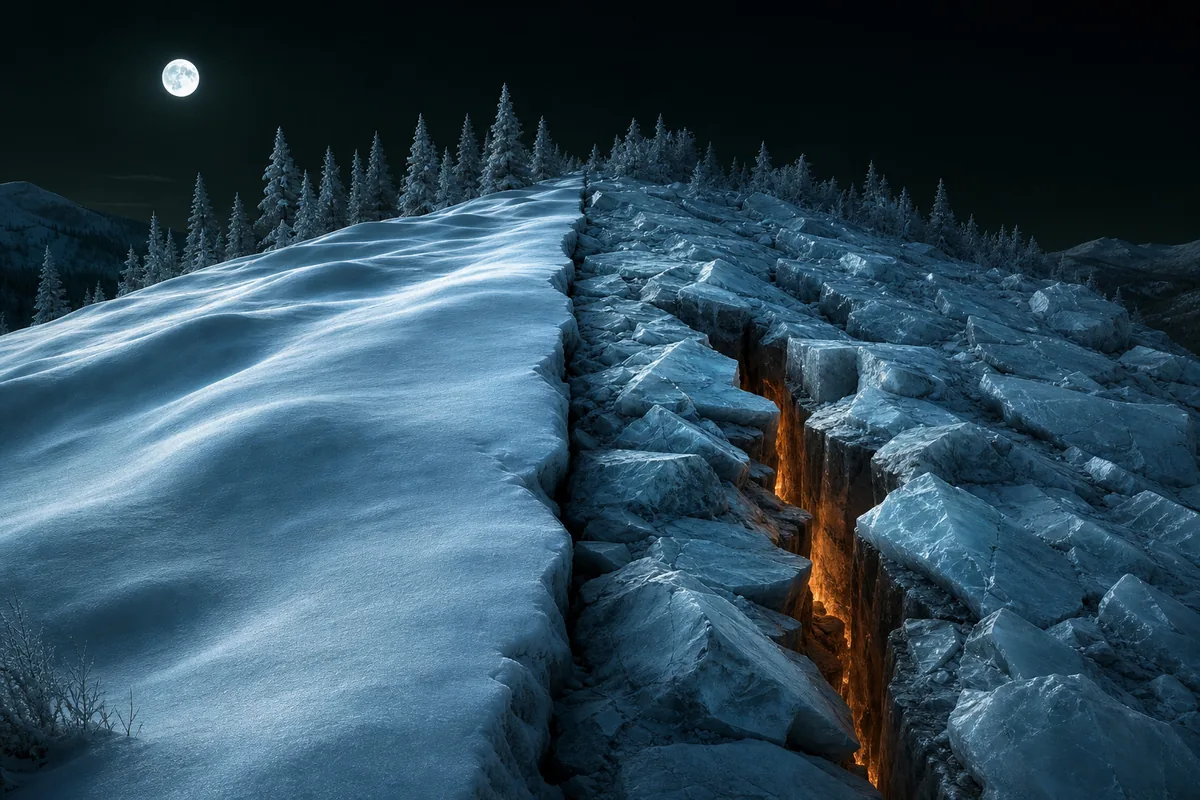
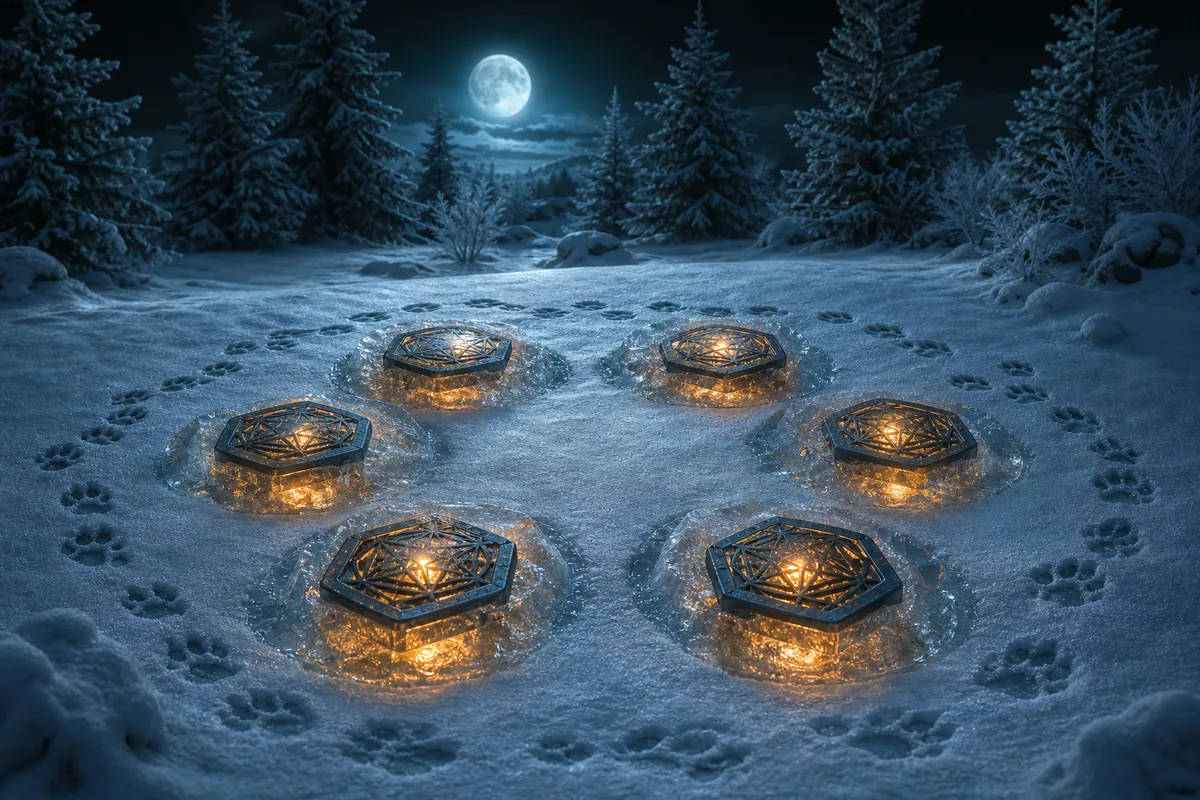
Wolf games almost all share the same backdrop: night, snow, conifers, moon. The theme lists in the catalogue show it plainly — Moonlight Wolf: Power Coins by NetGame lists Forest, Moon, Snow and Winter side by side, Wolf's Claws by clawbuster lists Forest, Nature and Snow.
That backdrop is dark and quiet. It carries glowing objects on the grid better than bright fruit symbols do, because the contrast comes for free.
Which effectively pre-decides a design question: build a night scene and you will almost inevitably build something that glows inside it.
Hold and win suits the visual language
The hold-and-win family works with coins or value symbols that stay on the field and light up visibly. Against a snowy night scene that reads better than against any bright background.
The concentration in the catalogue is striking. Area Link Wolf by Area Vegas lists hold and win plus link win at 96.45 percent, HIGH, 5000x. Moonlight Wolf: Power Coins combines hold and win with a cash collector at 96.16 percent, LOW, 5000x. Wolf's Claws uses the same mechanic at 95 percent, HIGH, with a 10,000x ceiling.
Three studios, three volatility profiles, one core mechanic. The theme dictates the look, the mechanic fills it in — and the maths underneath stays interchangeable.
The pack as a metaphor for quantity
There is a second, less obvious reason. Hold and win pays by area: the more cells occupied, the larger the sum. A pack is exactly that — a group that works through numbers rather than through a single animal.
Black Wolf 2 by 3 Oaks uses that structure at 95.54 percent, MED, with a 2000x ceiling. Diamond Link: Almighty Wolf by Greentube does the same at 95.01 percent, MED-HIGH, capped at just 1000x.
With a single-object theme — a book, a key, a hero — the metaphor does not work. Which is why books end up on expansion mechanics and packs end up on collection mechanics.
Cluster grids are the exception here
Anyone expecting wolf titles to lean on true cluster grids will find little support in the data. The feature lists of the 60 wolf games overwhelmingly name hold and win, respins, free spins and wilds — cluster pays barely appear at all.
What does appear as a related build is the falling-symbol engine. Ice Wolf 2 by ELK Studios lists cascading at 94 percent, HIGH, with a 10,000x ceiling. 4 Wild Wolves by Armadillo Studios runs avalanche and cascading at 94.23 percent, HIGH, 4285x.
Both produce the sensation people associate with clusters — symbols vanish, new ones drop in, a chain can keep going. Formally it is a different family, and the difference is right there in the feature list.
Ways grids as the third route
Alongside falling symbols, wolf titles frequently use a ways grid: no fixed lines, but scoring across adjacent reels. Wolf Legend Gold Megaways by Blueprint runs megaways, avalanche and cascading at 95 percent, HIGH, 10,000x.
5 Wild Wolves by 4ThePlayer uses multiway with more than 1024 ways at 96 percent, HIGH, with an 18,000x ceiling. Here too it is area that counts, not lines.
So the three most common builds in the pack catalogue share one property: they score the grid as a whole. For a theme built on groups, that is the obvious choice.
What that means when choosing
To know how a wolf title plays, read the feature list first and look at the artwork second. Hold and win means a bonus that grows visibly with a clear running total. Cascading means chain reactions with an uncertain end.
The artwork, meanwhile, barely separates these games at all. Moon, snow and conifers repeat across twenty studios without the maths behind them having anything in common.
Two games with the same backdrop can feel like opposites — what separates them sits in the columns, not on the screen.